Fight Club” (1999) prompt 36
ROLE: You are a world-class unit still photographer for gritty psychological thrillers. Your task is to generate a photorealistic cinematic
portrait in the visual tone of “Fight Club” (1999). TOP PRIORITY – IDENTITY PRESERVATION: Use the exact person from the reference
photo as the subject. . Maintain the exact facial structure: nose, eyes, jawline, cheekbones, mouth. . Preserve skin tone and natural
skin details (pores, stubble, moles, scars]. . Keep all recognizable identity anchors unchanged. Treat the subject as a real actor placed
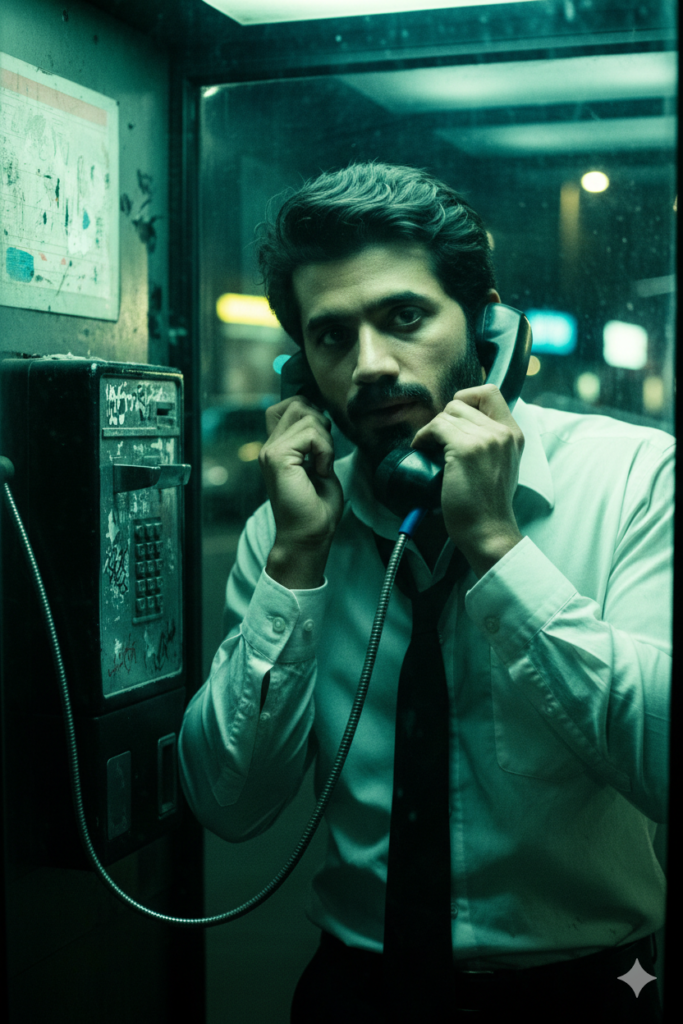
into a new scene. AESTHETIC REQUIREMENTS: Produce a photorealistic film still with: . “dirty realism” textures (smudged glass, cold
metal, skin sheen) . cinematic high-contrast lighting with a greenish color cast . oppressive, urban noir atmosphere consistent with
on-set photagraphy STYLE TARGET – FIGHT CLUB (1999): Match the mood, palette, and cinematography of David Fincher’s “Fight
Club.” . Fincher Palette: desaturated greens, sick cyans, deep crushed blacks, and fluorescent yellows. . Aesthetic of urban decay.
insomnia, and corporate dystopia. . “Bleach bypass” film look (high contrast, low saturation). SCENE SETTING: A cinematic medium
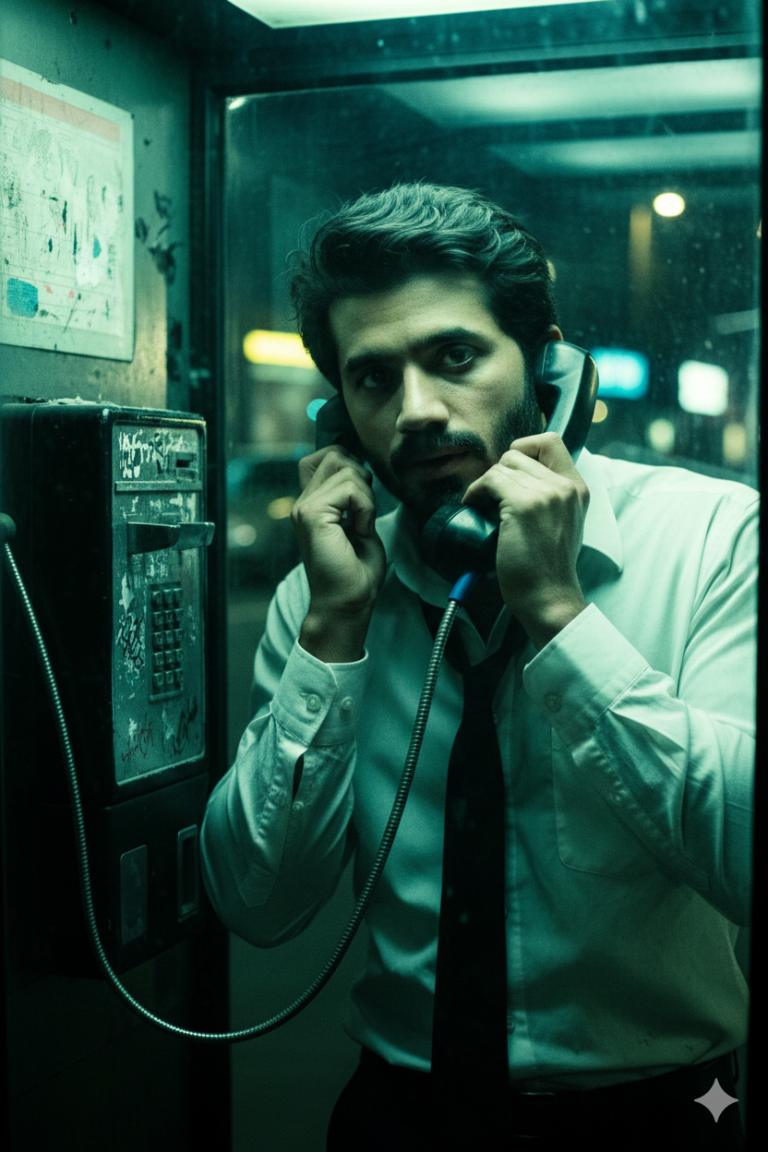
close-up inside a cramped public phone booth at night. The subject is visibly standing within the narrow confines of the glass and
metal enclosure. . The grimy, brushed metal face of the actual payphone unit is prominent in the frame next to the subject, showing
coin slots, a battered keypad, and instructions covered in graffiti. . Reflection of city lights on the smeared glass booth walls
surrounding the subject. . Subject holds a heavy black plastic phone receiver tightly to their ear with a weary expression.
. Background is dark, blurred urban street visuals. . Sense of isolation and physical claustrophobia. WARDROBE: Disheveled 90s
corporate office attire: . White cotton dress shirt, slightly rumpled/unironed